Earthworks, Excavation & Soil Removal Melbourne
HPL Construction provides earthworks, excavation and soil removal for residential construction, Build Your Home projects, retaining walls and general site preparation across Melbourne and surrounding growth corridors — covering bulk excavation, site cuts, soil and spoil removal, and site grading, levelling and drainage preparation. Request a free site assessment and quote below.
- What We Cover
- Site Grading, Levelling & Drainage Preparation
- Soil & Material Types
- Wet Clay
- How Much Soil Needs to Be Removed?
- What Affects Excavation & Soil Removal Costs?
- Excavator & Truck Capability
- Site Access Matters
- Our Process
- What HPL Can Help With
- Earthworks Across Melbourne
- Frequently Asked Questions
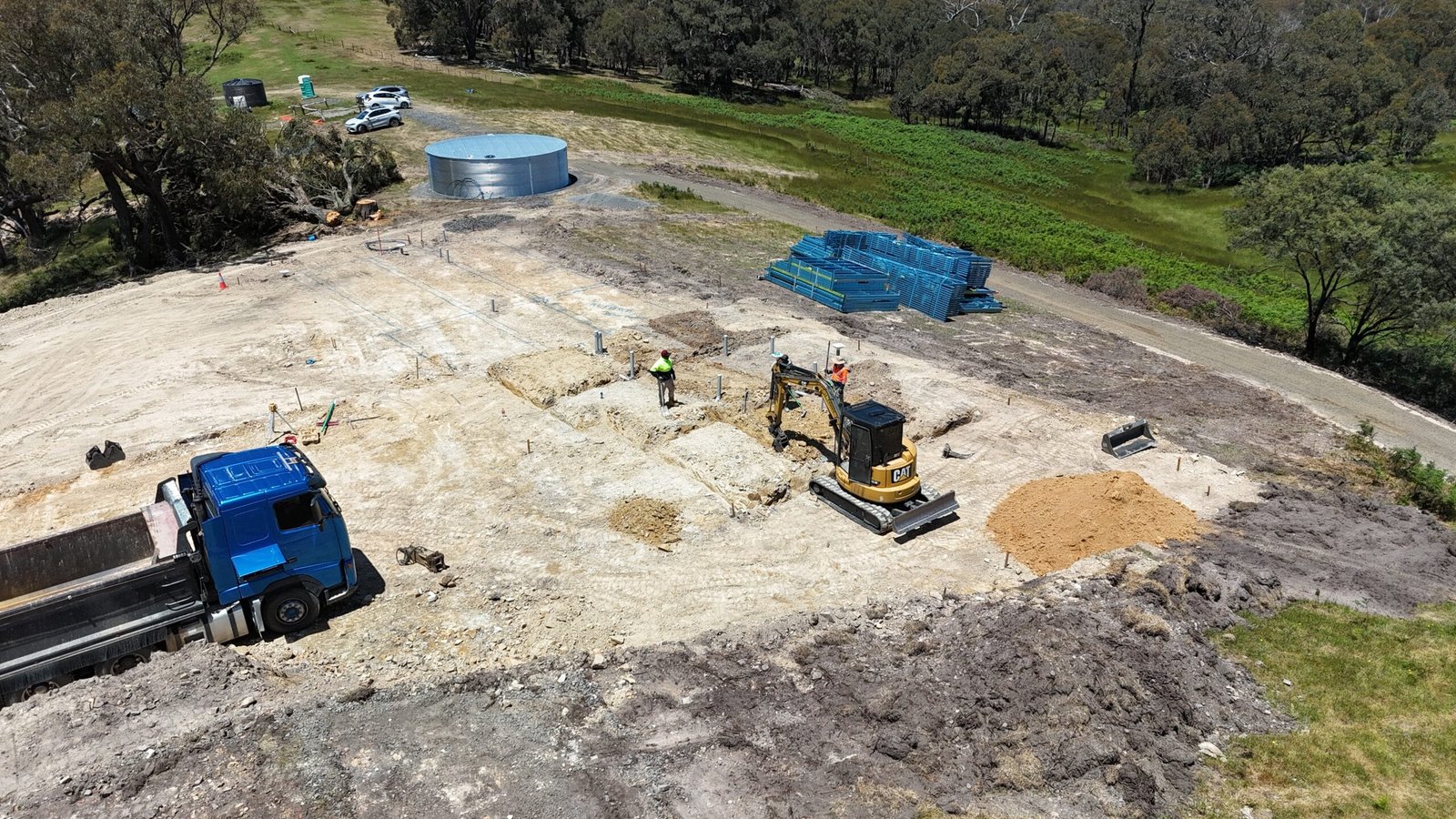
What We Cover
"Earthworks" covers the full range of ground-moving work involved in getting a Melbourne site ready to build on, landscape, or improve — from a full residential site cut through to fine grading for drainage falls. HPL Construction handles this as one coordinated service, with dedicated in-depth pages for the areas most people search for individually:
Site Grading, Levelling & Drainage Preparation
Earthworks in the narrower sense — the sense our own FAQs below distinguish from a house-slab site cut or bulk excavation — covers the broader shaping and preparation of a site beyond a single cut: grading a yard for proper drainage falls, levelling an area for landscaping or a future structure, or reshaping ground ahead of a retaining wall or driveway project. Good earthworks planning avoids water pooling against a house, uneven surfaces, and drainage problems down the track.
HPL Construction carries out this kind of grading and levelling as a standalone project or as part of a larger slab, driveway or retaining wall job, working from survey levels and engineering drawings where available, or assessing and advising on suitable levels for your project. Cut and fill balancing across a site is planned to minimise unnecessary material movement where the site allows it.
What Types of Soil and Material Can Be Removed?
Melbourne sites throw up a genuine range of material during excavation: general topsoil, clay (including reactive clay common across much of Melbourne's growth corridors), sandy and loamy soil, mixed fill from previous site works, and occasionally rock or gravelly material. Our Soil Removal page covers the full detail on soil and spoil types, bulked volume and truck loads.
What can actually be removed and how it's disposed of depends on the material's classification, whether it shows any sign of contamination, its moisture content, the quantity involved, and what a receiving facility will accept. We assess this as part of your site visit rather than assuming every material can be treated the same way — where material needs specialist handling or a soil report, we'll say so upfront rather than after the job has started.
Wet Clay
Wet clay is one of the most common practical complications on a Melbourne excavation job, and it's worth understanding before you get a quote. Clay that's saturated from rain or a high water table behaves very differently to dry material:
- Weight. Wet clay is significantly heavier than dry soil of the same volume, which reduces how much a truck can legally carry per load — meaning more truck movements for the same amount of material.
- Loading difficulty. Wet, sticky clay is slower to excavate and load cleanly, and can stick to bucket and truck trays, adding time to the job.
- Site access. Saturated ground is softer, which can restrict where heavy equipment and trucks can safely work without additional ground protection.
- Weather timing. Excavation is sometimes scheduled or paused around wet weather for exactly these reasons, particularly on sites that are already clay-heavy.
These factors can genuinely affect both the time a job takes and its cost, since more truck loads and slower loading both add to the job. We don't publish a fixed dollar figure for wet clay handling because it depends on how wet, how much, and site access on the day — it's something we account for directly when we quote a site with known clay conditions.
How Much Soil Needs to Be Removed?
The volume involved changes both the logistics and the economics of a job. A small garden levelling job, a standard residential site cut, and a bulk excavation for a multi-unit development are genuinely different undertakings:
- Small quantities (a few cubic metres, a garden bed or small level-up) often carry a higher effective cost per cubic metre, because mobilising machinery and a truck to site costs roughly the same whether they move 2m³ or 20m³.
- Medium residential excavation (a standard house site cut) is the most common job we quote, sized against your engineered finished floor level.
- Large bulk excavation (subdivisions, basements, multi-unit sites) can be excavated and transported more efficiently per cubic metre, since fixed costs like mobilisation are spread across a much larger volume.
Volume also determines how many truck loads a job needs, which is directly tied to excavator size, loading time and how far material has to travel for disposal or reuse. Our free Excavation Calculator and Soil Removal Calculator give an instant estimate of volume and truck loads before you request a formal quote.
What Affects Excavation & Soil Removal Costs?
We don't publish flat per-cubic-metre pricing, because it genuinely varies by site. The main factors we account for when quoting excavation and soil removal work include:
- Volume of material to be excavated or removed
- Soil type and ground conditions
- Wet clay or high moisture content
- Material classification and any contamination indicators
- Excavator size required for the job
- Site access for machinery
- Truck access to and from the excavation area
- Number of truck loads required
- Haul distance to a disposal or reuse site
- Disposal charges at the receiving facility
- Required excavation depth
- General ground conditions across the site
- Rock or unexpected material encountered during the dig
- Mobilisation of machinery and crew to site
- Expected project duration
- Machinery required for the specific job
The price per cubic metre is not always fixed. Larger quantities can sometimes be priced more efficiently, while smaller quantities may carry minimum mobilisation, machinery or transport costs regardless of volume. Every quote we provide is itemised against your specific site rather than a flat rate.
Excavator & Truck Capability
Matching the right excavator and truck combination to a site is one of the biggest factors in getting a job done efficiently. We select machinery based on the excavation depth required, the volume of material involved, bucket size suited to the ground conditions, and how much room is available to manoeuvre on site. A tight, narrow residential block calls for a different machine to a large open subdivision cut, and truck size is matched to what the site access can actually accommodate.
We assess equipment and truck requirements as part of every site visit rather than assuming a one-size-fits-all approach — this is discussed directly with you as part of your quote.
Site Access Matters
Site access affects both pricing and productivity more than most people expect. Things we assess include:
- Narrow driveways or gateways that limit machine and truck size
- Limited truck access, including whether trucks can turn or need to reverse in
- Overhead restrictions such as power lines or low branches
- Fences and neighbouring properties that constrain working space
- Soft or wet ground that limits where heavy equipment can safely work
- Distance between the excavation area and where a truck can park, which can require additional handling
- Council-restricted working hours in some areas
Because access has such a direct effect on how a job is priced and planned, it genuinely helps to provide site photos, plans and any access information you have when you request a quote — it means the quote you receive is accurate the first time, rather than needing revision once we're on site.
Our Earthworks & Excavation Process
- Initial enquiry. Tell us about your project, suburb and rough scope.
- Review plans and site information. We look at any plans, engineering drawings or survey levels you have.
- Assess access. Site photos and access details help size the right equipment and truck combination.
- Estimate excavation volume. Using plans, levels or a site visit, depending on project stage.
- Identify material type. Soil, clay and ground conditions affect equipment, timing and disposal.
- Plan the excavation. Sequencing, machinery and truck requirements are confirmed.
- Load excavated material. Excavation and loading proceed to plan.
- Remove spoil. Excavated material is transported from site.
- Dispose or transport appropriately. Material is reused on-site where suitable, or removed for disposal.
- Prepare the site for the next stage. Ready for slab, retaining wall, driveway or landscaping work to follow.
What HPL Construction Can Help With
Earthworks Across Melbourne
HPL Construction carries out earthworks, excavation and soil removal across Melbourne and the surrounding growth corridors, including Craigieburn, Tarneit, Werribee and Epping, among many other suburbs. Browse every suburb we service, or explore by region: Inner Melbourne, Northern Suburbs, Western Growth Corridor, Eastern Suburbs, South-Eastern Growth Corridor, Southern Suburbs & Mornington Peninsula and Regional Victoria.
Frequently Asked Questions
What is bulk excavation?
Bulk excavation is large-volume excavation for projects like subdivisions, basements and multi-unit developments, as distinct from a standard residential site cut. See our Bulk Excavation page for full detail.
What is a site cut?
A site cut levels a residential block to the height and fall needed for a house slab, based on your engineered finished floor level. See our Site Cuts & Excavation page for the full process.
How much does soil removal cost in Melbourne?
We don't publish fixed prices, because cost depends on volume, soil type, moisture, site access and disposal distance. Every quote is itemised against your specific site — see What Affects Excavation & Soil Removal Costs above for the full list of factors.
What affects soil removal prices?
Volume, soil and material type, moisture (including wet clay), site and truck access, haul distance, disposal charges, excavation depth, ground conditions and mobilisation all factor into pricing. See the cost section above for the complete list.
Can you remove wet clay?
Yes. Wet clay is heavier and slower to load than dry material, which can mean more truck loads for the same volume — we account for this directly when quoting a site with known clay or wet-weather conditions.
Can you remove construction spoil?
Yes. Spoil — the soil and material generated by excavation — is loaded and removed as part of our excavation and soil removal service. See our Soil Removal page for the full disposal process.
How is excavated soil transported?
Excavated soil is loaded and removed by tipper truck, either reused on-site for fill and landscaping where suitable, or transported for disposal at an appropriate facility.
How many truck loads will my excavation require?
This depends on the volume of material and whether it needs to be bulked (soil generally increases in volume once excavated). Our free Excavation Calculator and Soil Removal Calculator give an instant estimate of volume and truck loads.
Does site access affect excavation pricing?
Yes, significantly. Narrow driveways, limited truck access, overhead restrictions and soft ground can all affect what equipment can be used and how efficiently a job runs. Providing site photos and access details when you enquire helps us quote accurately.
Can HPL remove soil from a residential building site?
Yes. Residential site cuts and soil removal for new homes, extensions, townhouses and multi-residential projects are among the most common jobs we quote across Melbourne.
Do you provide excavation and spoil removal together?
Yes. We manage excavation and the removal of resulting spoil as one coordinated service, rather than requiring separate bookings.
Can you remove concrete waste or demolition rubble?
Where demolition rubble or concrete waste comes up during excavation or soil removal, we handle loading and removal of that material as part of the job. We're not a standalone concrete demolition or waste-hauling service — for larger, demolition-specific waste volumes unrelated to excavation, that's worth discussing with us directly as part of your quote.
What information do you need to quote excavation?
Your project address or suburb, a rough idea of scope, any plans or engineering drawings you have, and site access details or photos. The more detail you can provide upfront, the more accurate your quote will be.
Can you excavate for house slabs?
Yes. Site cuts to your engineered finished floor level are the standard first step before a waffle, raft or reinforced slab — see our House Slabs page for how the two connect.
Can you excavate for retaining walls?
Yes. Retaining wall projects typically need excavation and site preparation before construction, and spoil removal afterwards — see our Retaining Walls page for the full process.
What is the difference between earthworks and excavation?
In practice the terms overlap, but on this site "earthworks" also covers broader grading, levelling and drainage-fall preparation, while "excavation" more specifically covers site cuts and bulk digging. We handle both as part of the same service.
Related Calculators
Ready To Get Started?
Request a free, no-obligation quote and our team will assess your site and provide an accurate, fixed price.