Screw Piles Melbourne: Fast, Low-Disruption Foundations
Fast, verifiable screw pile foundations for decks, carports, granny flats and light structures across Melbourne, installed with minimal site disruption.
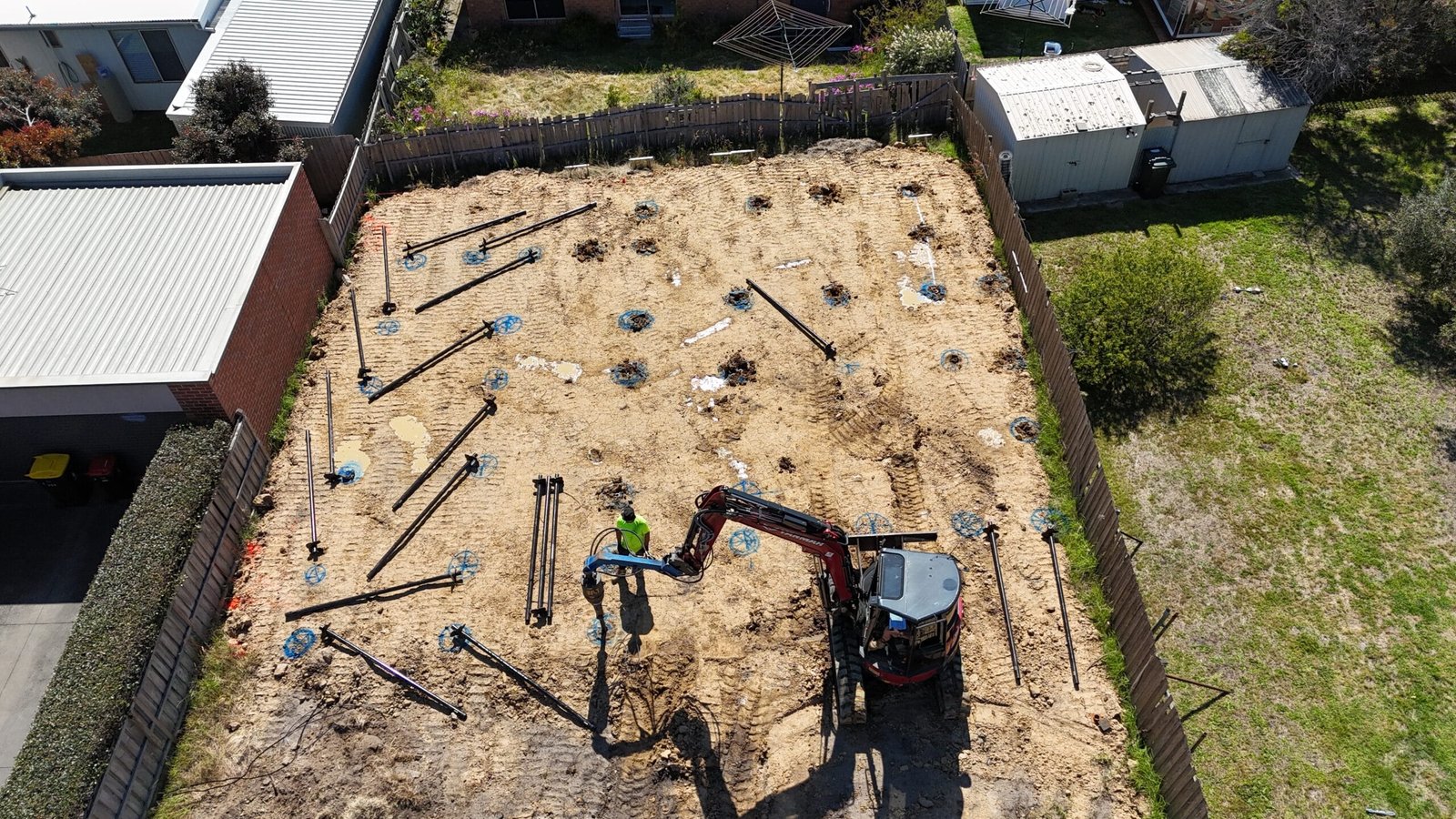
What Are Screw Piles?
Screw piles are pre-fabricated steel piles with helical flights that are wound directly into the ground using hydraulic equipment, providing a fast, low-disruption foundation solution without the need to bore, excavate or pour concrete on site. As a trusted screw pile installer, HPL Construction uses screw piles to support decks, verandahs, carports, granny flats and other lightweight structures across Melbourne, particularly where speed, minimal site disturbance or difficult access make a bored pier or traditional footing impractical.
Unlike bored piers, which require boring a shaft and pouring concrete, screw piles are mechanically wound into the ground to a depth and torque specified by an engineer, then cut and capped ready for construction. This makes installation faster, cleaner and far less disruptive to an existing garden, driveway or landscaped yard — a genuine advantage for renovation and extension projects where protecting the existing property matters as much as the new structure.
Screw pile capacity is verified during installation itself: as each pile is wound in, the installation torque is measured and recorded, giving an immediate, on-site indication of whether the pile has reached adequate bearing capacity at the specified depth. This makes screw piles a reliable, verifiable foundation option, suited to a wide range of soil types across Melbourne, from sandy soils to moderately reactive clay.
Foundation Options: Screw Piles, Bored Piers & Strip Footings
Screw piles are one of three foundation methods we use, depending on your site and structure.
Benefits of Screw Pile Foundations
Fast Installation
Screw piles can typically be installed in a single day, with no curing time required before building can continue.
Minimal Site Disruption
No excavation, spoil removal or concrete pouring, making screw piles ideal for renovations and established gardens.
Verified On-Site Capacity
Installation torque is measured for every pile, giving immediate confirmation of load-bearing capacity.
Suited to Tight Access
Compact equipment can access tighter sites than larger piering or excavation machinery.
Removable & Reusable
Screw piles can be removed if a structure is relocated, unlike permanent concrete footings.
Cost-Effective for Light Structures
A cost-effective foundation solution for decks, verandahs, carports and other lightweight structures.
Planning a new deck, carport or granny flat?
Get Your Free QuoteWhere This Service Is Used
Screw piles are used wherever a fast, low-disturbance foundation is needed for a lightweight to moderate-load structure. Common applications include:
- Deck and verandah footings
- Carport and pergola footings
- Granny flat and studio foundations
- Boundary and privacy fence footings on difficult ground
- Solar panel ground-mount foundations
- Temporary and relocatable structure footings
Screw piles are particularly popular for renovation and outdoor living projects across Melbourne — from screw piles in Point Cook to screw piles in Berwick — where homeowners want a new deck or carport installed quickly, without the excavation, mess and downtime that comes with a poured concrete footing.
Screw piles are also a strong option where access is restricted, such as narrow side passages or established backyards where larger excavation equipment simply can't reach. Because installation doesn't require concrete curing time, framing and construction can often begin the same day the piles are installed, which is a genuine advantage for homeowners wanting their deck, carport or granny flat project completed as quickly as possible.
Timing matters just as much with screw piles as with any other foundation type, even though the installation itself is fast. We coordinate with builders, landscapers and other trades so piles are installed at the right point in your project — after any required excavation or site preparation, but before decking, framing or other structural work begins. Getting this sequencing right means the rest of your project can proceed without waiting on a foundation stage that, done properly, shouldn't hold anything up.
Residential & Commercial Applications
Residential Screw Piles
- Deck and verandah footings
- Carport and pergola footings
- Granny flat and studio foundations
- Fence footings on difficult ground
- Solar panel ground-mount footings
- Relocatable and temporary structure footings
Commercial Screw Piles
- Signage and structure foundations
- Temporary site office footings
- Walkway and access structure footings
- Solar farm ground-mount foundations
- Light commercial structure footings
- Foundations for staged or relocatable builds
Our Process, From Enquiry to Completion
- Enquiry & site details. Tell us your address, the structure you're building (deck, verandah, carport, granny flat, etc.) and any engineering drawings or plans you already have.
- Free, itemised quote. We assess your site and provide a clear written quote covering pile quantity, layout and installation -- no vague allowances.
- Scheduling. Once you're ready to proceed, we confirm a date, site access and pile layout in line with the engineering requirements for your structure.
- Installation. Our crew carries out the pile installation -- see the process steps below for the full breakdown, from site assessment through to cutting and capping.
- Inspection & handover. Installation torque records are provided as verification for your certifier, and the site is left clean and ready for your builder or trades to begin framing.
Our Screw Pile Process
A fast, engineer-led process from site assessment to a fully installed foundation.
Site Assessment
We assess your site, structure type and expected loads to confirm screw piles are the right foundation solution.
Engineering & Pile Layout
Pile positions, depth and torque requirements are confirmed in line with engineering requirements for your structure.
Pile Installation
Screw piles are wound into the ground using hydraulic equipment, with installation torque recorded for each pile.
Cut & Cap
Piles are cut to the correct height and capped, ready for the structure's framing to begin.
Final Check
Installed piles are checked against the engineering specification before construction of the structure continues.
Equipment & Materials Used
HPL Construction uses hydraulic screw pile installation equipment sized to suit your project, from compact rigs for tight backyard access through to larger equipment for bigger structures and commercial applications. Pile selection — diameter, helix configuration and steel specification — is matched to your soil conditions and the loads the structure needs to carry, based on engineering requirements.
All screw piles are manufactured from galvanised steel for corrosion resistance and long-term durability, an important consideration for a foundation element that will remain in the ground for the life of the structure. Because screw piles don't require poured concrete, there's no need for reinforcement steel, formwork or curing time on-site, which is a large part of why installation is so much faster than a bored pier or traditional footing.
Installation torque is monitored and recorded using the rig's onboard equipment throughout the process, giving a verifiable, documented record that each pile has achieved the required bearing capacity at the specified depth. This record can be provided as part of your project documentation, giving you and your certifier confidence in the completed foundation.
Because there is no wet concrete, formwork or excavated spoil involved, screw pile jobs leave a noticeably cleaner site than other foundation methods, with no waiting for weather-dependent curing and no cleanup of excess concrete or fill. This is one of the reasons screw piles have become a popular choice for homeowners renovating an established property, where protecting existing paving, lawn and garden beds is just as important as the new structure itself.
Engineering & Compliance Considerations
Pile design and installation in Australia sits within the scope of AS 2159 (Piling — Design and installation), the standard covering pile design methodology, load testing and installation verification across pile types, including screw (helical) piles. For an engineered job, our pile layout, depth and quantity follow a structural engineer's design prepared with reference to this standard and your site's soil conditions.
Installation torque is the key on-site verification method for screw piles. As a pile is wound into the ground, the torque required to advance it increases with the density and strength of the soil it's passing through. That installed torque correlates to the pile's geotechnical bearing capacity, so recording torque at final depth for every pile gives an immediate, verifiable, pile-by-pile record that the required capacity has been achieved -- rather than relying on an assumption from the soil report alone. This record forms part of the documentation your building surveyor or engineer may require for sign-off.
Whether a building permit is required, and what it needs to cover, depends on the specific structure being built and its size -- this is determined by your registered building surveyor as part of the approval process, administered under Victorian building regulations through the Victorian Building Authority (VBA). We install to the engineer-approved pile layout and can provide torque records to support your surveyor's inspection requirements.
An honest limitation worth stating clearly: screw piles are genuinely well suited to light and moderate structural loads -- decks, verandahs, pergolas, carports, granny flats and similar lightweight structures. They are not a universal substitute for a full footing system. Where a structure carries very heavy structural loads, such as a multi-storey extension or a larger commercial building, a bored pier or a full engineered footing system is typically the more appropriate foundation, particularly on reactive clay sites. Your engineer's assessment of the structure and soil conditions determines which foundation method is actually right for your project, and we'll advise honestly if screw piles aren't the best fit.
Why Choose HPL Construction for Screw Piles
Melbourne-Wide Service
Residential & Commercial
Hydraulic Piling Equipment
Fast, Single-Day Installation
Verified Installation Torque
Fully Insured
Experienced Team
Clear Communication
Common Challenges & How We Solve Them
Restricted or tight site access
We use compact hydraulic rigs suited to narrow side passages and established backyards where larger equipment can't reach.
Uncertain soil bearing capacity
Installation torque is measured and recorded for every pile, giving an immediate, verifiable indication of bearing capacity.
Protecting existing landscaping
Screw piles require no excavation or spoil removal, minimising disruption to lawns, gardens and paved areas.
Tight construction timelines
With no concrete curing time required, framing can often begin the same day piles are installed, keeping your project moving.
Cost Factors
We don't publish fixed screw pile prices, because the real cost depends on site-specific variables that only become clear once we've assessed your project. The main factors are:
- Number of piles required -- determined by the structure's size, layout and bearer spacing.
- Pile depth -- softer or looser soils generally require piles to be wound deeper to achieve the required torque and bearing capacity.
- Pile diameter and specification -- matched to the loads your structure needs to carry.
- Site access -- whether our standard rigs can reach the pile positions, or more compact equipment is needed for tight side access or an established backyard.
- Structure type -- residential deck and verandah jobs are generally more straightforward than commercial or larger-scale installations.
- Engineering requirements -- whether a structural engineer's design and inspection sign-off is needed for your specific structure.
Every quote we provide is itemised, so you know exactly what you're paying for. For a fast planning figure before you request a formal quote, try our Screw Pile Calculator.
Get a fixed-price screw pile quote for your Melbourne project.
Request A QuoteSafety & Quality Standards
Screw pile installation uses hydraulic equipment under load, so our crews follow strict safe work procedures around equipment operation, service locates and site management on every job. Before installation begins, we confirm the location of underground services to avoid the risk of a strike during piling.
Every pile is installed to the depth and torque specification required for your structure, with installation data recorded as verification. Our team is fully licensed and insured, and screw pile installation is completed in line with relevant Australian Standards, so the foundation beneath your deck, carport or granny flat is one you can rely on.
Frequently Asked Questions
What is the difference between screw piles and bored piers?
Screw piles are steel piles wound into the ground with no concrete or excavation required, while bored piers are concrete foundations formed by boring a shaft and pouring reinforced concrete. Screw piles are faster and less disruptive, while bored piers suit heavier structural loads.
What structures are screw piles suitable for?
Screw piles are commonly used for decks, verandahs, carports, pergolas, granny flats, fences and other light to moderate-load structures.
How long does screw pile installation take?
Most residential screw pile jobs are completed in a single day, depending on the number of piles and site access.
Do screw piles need concrete?
No. Screw piles are a fully mechanical foundation system, requiring no concrete, formwork or curing time.
Are screw piles suitable for all soil types?
Screw piles work well across a range of soil types including sandy and moderately reactive soils. Your engineer will confirm suitability based on a soil assessment.
Can screw piles be used on a sloping block?
Yes. Screw piles can be installed to varying depths, making them well suited to sloping or variable sites.
Do you provide an engineering certificate for screw piles?
Installation torque is recorded for each pile as verification of bearing capacity, which can support the engineering documentation required for your project.
Can screw piles be removed later?
Yes, unlike a poured concrete footing, screw piles can be unscrewed and removed or reused if a structure is relocated.
Are screw piles more affordable than bored piers?
For lightweight structures like decks and carports, screw piles are often more cost-effective due to faster installation and no concrete or excavation costs.
Do you install screw piles for granny flats?
Yes. Screw piles are a popular foundation choice for granny flats and studios due to their speed and minimal site disruption.
What areas do you install screw piles in?
We install screw piles throughout Melbourne and surrounding growth corridors, including the western, northern, eastern and south-eastern suburbs.
Do you provide free screw pile quotes?
Yes. We provide free, no-obligation quotes based on your structure type, site conditions and engineering requirements.
Can I get an early cost estimate for screw piles before requesting a quote?
Yes. Our free online estimate tools can give you an early indication of cost before you request a formal quote.
Do you coordinate with builders and engineers?
Yes. We work directly from engineering specifications and coordinate installation timing with builders to keep your project on schedule.
Is a permit required for screw pile installation?
Permit requirements depend on the structure being built. Deck and carport projects are typically covered under a building permit, which we can advise on during your quote.
What Australian Standard applies to screw pile design and installation?
Pile design and installation sits within the scope of AS 2159 (Piling -- Design and installation), which covers pile design methodology, load testing and installation verification across pile types, including screw (helical) piles. For engineered jobs, our pile layout and depth follow a structural engineer's design prepared with reference to this standard.
How does installation torque actually verify bearing capacity?
As a screw pile is wound into the ground, the torque required to advance it increases with the strength of the soil it's passing through. That installed torque correlates to the pile's geotechnical bearing capacity, so recording torque at final depth gives an immediate, pile-by-pile record that the required capacity has been achieved, supporting your engineer or certifier's sign-off.
Are screw piles suitable for heavier structures, like a two-storey extension?
Not always. Screw piles are genuinely well suited to light and moderate structural loads -- decks, verandahs, pergolas, carports and granny flats. For very heavy structural loads, such as a multi-storey extension or a larger commercial building, a bored pier or a full engineered footing system is typically the more appropriate foundation. We'll advise honestly on the right method for your specific structure and site.
What happens between my initial enquiry and the piles being installed?
We start with your site and structure details, provide a free itemised quote, then confirm scheduling, access and pile layout in line with engineering requirements. Our crew carries out installation from site assessment through to cutting and capping, and torque records are provided as verification for your certifier at handover.
What affects the cost of screw pile installation?
The main factors are the number of piles required, pile depth (deeper in softer soils), pile diameter and specification, site access, whether it's a residential or commercial job, and whether structural engineering sign-off is needed. We provide a free, itemised quote once we've assessed your site.
Related Services & Resources
Screw Piles Across Melbourne
We install screw pile foundations throughout Melbourne and Victoria, from established inner suburbs to growth-corridor estates. Browse your region below, or see every suburb we service.
Related Calculators
Get an instant planning figure before you request a formal quote.
Ready to Get Your Project Moving?
Request your free, no-obligation screw pile quote today and get your deck, carport or granny flat foundation installed fast.