Concrete Pumping Melbourne: Line & Boom Pumping for Every Site
Accurate, efficient line and boom concrete pumping for residential and commercial pours across Melbourne, including tight-access and large-scale sites.
What Is Concrete Pumping?
Concrete pumping is the process of delivering concrete from the truck to the exact point of the pour using a dedicated pump, rather than relying solely on wheelbarrows or direct chute access. As experienced concrete contractors Melbourne builders trust for both straightforward and difficult pours, HPL Construction uses line and boom pumping to place concrete accurately, efficiently and with far less manual handling than traditional placement methods.
Line pumps push concrete through flexible hose, making them well suited to smaller residential jobs, tight side access, or pours some distance from where the truck can park. Boom pumps use a hydraulic articulated arm mounted on a truck to place concrete directly over a site, ideal for larger pours, multi-storey structures, or sites where reaching the required area with hose alone would be impractical. Choosing the right pump for your site and pour size is part of getting an efficient, well-finished result.
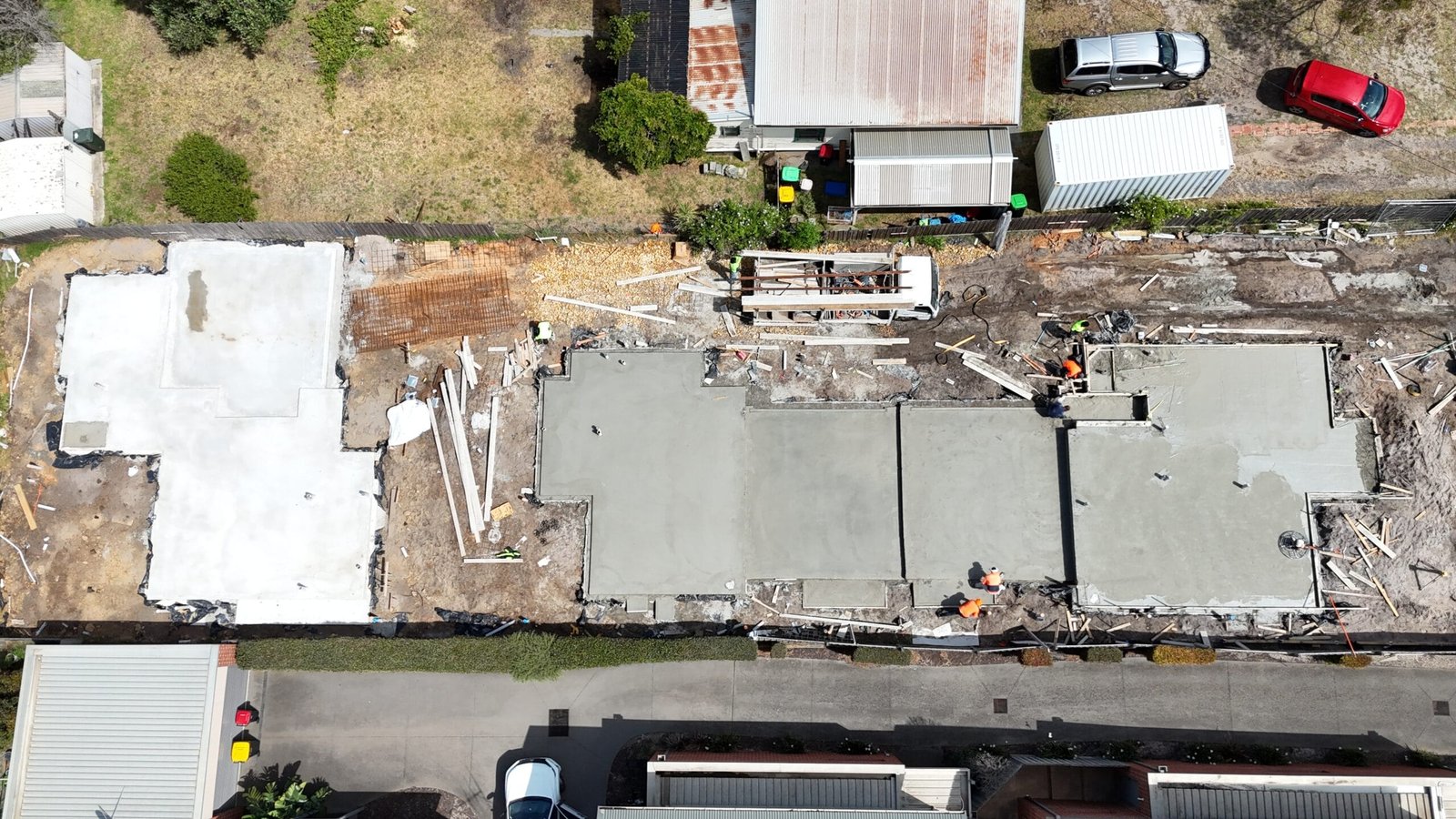
Concrete pumping matters most on jobs where access, distance or scale make traditional placement slow or difficult. A house slab on a tight inner-suburban block, a large commercial pour, or a job with restricted truck access can all benefit significantly from pumping — concrete is placed continuously and accurately, reducing the risk of cold joints, uneven placement or delays that can affect the quality of the finished pour.
Benefits of Concrete Pumping
Accurate, Continuous Placement
Concrete is placed exactly where needed, reducing the risk of cold joints and uneven distribution.
Faster Pour Times
Pumping places concrete far faster than wheelbarrows, keeping large pours moving efficiently.
Access to Difficult Sites
Line and boom pumps reach areas trucks and manual handling simply can't, including tight or elevated sites.
Reduced Labour & Handling
Less manual handling means a safer, more efficient site for the crew placing the concrete.
Suited to Large & Small Jobs
From small residential slabs to large commercial pours, pump selection is matched to your project.
Consistent Finish Quality
Continuous, controlled placement supports a more even, higher-quality finished surface.
Got a pour with tricky access or a tight timeline?
Get Your Free QuoteWhere This Service Is Used
Concrete pumping is used wherever a pour benefits from accurate, efficient placement, whether due to site access, pour size or scheduling requirements. Common applications include:
- House slab pours on tight or restricted-access blocks
- Large commercial and multi-unit development pours
- Elevated or multi-storey structural pours
- Driveway and pathway pours with limited truck access
- Retaining wall and footing pours requiring precise placement
- Pours on sites with long distances between the truck and the pour location
Concrete pumping is especially valuable across Melbourne's established suburbs, where narrow driveways and tight blocks make direct truck access difficult — from concrete pumping in Werribee to concrete pumping in Berwick — as well as on larger new-build sites in growth corridors where pour volume and speed matter for keeping a build on schedule.
Because concrete pumping is often the difference between a smooth, efficiently placed pour and a slow, labour-intensive one, we assess site access and pour size as part of every quote, recommending pumping wherever it will genuinely improve the outcome rather than adding cost without benefit. On some smaller, easily accessible jobs, direct placement remains the more practical and cost-effective option, and we'll always advise honestly on what your specific site needs.
Residential & Commercial Applications
Residential Concrete Pumping
- House slab pours on tight blocks
- Driveway and pathway pours
- Retaining wall and footing pours
- Alfresco and outdoor room slabs
- Pool surround and landscaping pours
- Extension and second-storey pours
Commercial Concrete Pumping
- Large commercial slab and foundation pours
- Multi-storey structural pours
- Multi-unit development pours
- Car park and access-way pours
- High-volume pours requiring continuous supply
- Elevated and hard-to-reach commercial pours
Our Process, From Enquiry to Completion
- Enquiry & site details. Tell us your address, the type of pour (slab, driveway, footing, elevated pour, or otherwise), approximate volume and site access. If you're a builder or trade arranging your own concrete supply and only need pump access, let us know -- we regularly work this way, coordinating pump timing around your delivery schedule.
- Free, itemised quote. We assess your site access, pour volume and the reach or height needed to recommend a line or boom pump, and provide a clear written quote covering pump hire, operator and any standby allowance.
- Scheduling. We lock in a pump date and time to match your pour, confirm truck access, and arrange any council permits or traffic management the pump truck needs. If you're supplying your own concrete, we coordinate directly with your supplier or site manager on timing.
- Pump day. Our operator sets up the line or boom and places concrete continuously through the pour -- see the process steps below for the full breakdown.
- Completion & wash-down. Lines and equipment are cleaned down on site once placement is finished, so you can move straight into finishing and curing without the pump holding up the rest of your day.
Our Concrete Pumping Process
A clear, coordinated process from site assessment to a fully placed, well-finished pour.
Site & Access Assessment
We assess your site, pour size and access to determine whether line or boom pumping is the right fit.
Pump & Truck Scheduling
Pump and concrete truck delivery are scheduled together, so placement can proceed continuously once the pour begins.
Line or Boom Set-Up
The pump is positioned and set up, with hose or boom reach confirmed to cover the full pour area.
Continuous Placement
Concrete is pumped and placed accurately and continuously across the pour area, minimising cold joints.
Finishing & Curing
The placed concrete is screeded, finished and cured to specification, ready for the next stage of construction.
Equipment & Materials Used
HPL Construction operates and coordinates both line and boom concrete pumps, selected based on your site's access, the size of the pour, and how far concrete needs to travel from the truck to its final placement. Line pumps are well suited to smaller, tighter residential jobs, while boom pumps handle larger pours and sites needing greater reach or height.
Concrete mix design is matched to your project's structural and finish requirements, whether that's a standard house slab mix, a higher-strength commercial mix, or a mix suited to a specific finish. Pump lines and equipment are cleaned and maintained between jobs to avoid contamination and ensure consistent flow throughout the pour, which matters for both pour speed and finish quality.
On larger pours, we coordinate multiple concrete trucks with the pump schedule to maintain continuous supply, avoiding gaps in placement that can lead to cold joints or an uneven finish. This kind of scheduling — getting trucks, pump and crew all moving together — is part of what makes a well-run pumped pour noticeably smoother than a job relying on ad hoc truck-to-site access.
We also factor in council or site access requirements before pump day arrives, including any approvals needed for a pump truck to park on a residential street or shared access-way. Sorting this out in advance, rather than on the morning of the pour, is a small step that avoids unnecessary delays once concrete trucks are already on their way.
Engineering & Compliance Considerations
Concrete placing booms -- the truck-mounted, hydraulically articulated arm used for boom pumping -- are manufactured and inspected to AS 1418.11 (Cranes, hoists and winches – Concrete placing booms), the Australian Standard covering their design, construction and periodic inspection requirements. Line pumps, being simpler trailer or truck-mounted units that push concrete through hose rather than a load-bearing boom, sit outside this standard, which is one of several genuine differences between the two beyond reach and access.
Operating a concrete placing boom is classed as high risk work under Victorian and national work health and safety regulations, and our boom pump operators hold the relevant High Risk Work Licence issued by WorkSafe Victoria. Line pump operation doesn't require this same licence class -- another reason pump selection isn't purely about reach, but also about what equipment and licensing a site genuinely needs.
Once concrete leaves the pump line, its placement and compaction are governed by AS 3600 (Concrete structures), which requires concrete to be placed and thoroughly compacted -- typically with a poker vibrator -- before it begins to set. This is why continuous, well-scheduled placement matters: a gap in the pour caused by delayed trucks or an undersized pump can create a cold joint, a visible and structurally weaker seam where one batch has begun to set before the next is placed against it.
Pump trucks, particularly larger boom pumps, can also require a council permit or traffic management plan where they need to occupy part of a road or footpath to reach the pour, or position outriggers on a nature strip. We assess this during scheduling and arrange the necessary permits or traffic control ahead of pump day.
Why Choose HPL Construction for Concrete Pumping
Melbourne-Wide Service
Residential & Commercial
Line & Boom Pumping
Reliable Scheduling
Consistent Finish Quality
Fully Insured
Experienced Team
Clear Communication
Common Challenges & How We Solve Them
Restricted or tight site access
Line pumps reach tight side accesses and blocks that concrete trucks and wheelbarrows can't easily service.
Large or elevated pours
Boom pumps provide the reach and height needed for larger commercial and multi-storey pours.
Risk of cold joints on large pours
We coordinate truck deliveries with the pump schedule to keep concrete flowing continuously through the entire pour.
Long distances from truck to pour site
Pump hose and boom reach are assessed upfront to make sure concrete can be placed accurately across the full site.
Cost Factors
We don't publish fixed concrete pumping prices, because the real cost depends on site-specific variables that only become clear once we understand your pour. The main factors are:
- Pump type required -- line pumps are generally more economical than boom pumps, which involve larger, more specialised plant and a licensed operator.
- Pour volume and duration -- pump hire is typically priced around time on site, so a larger pour that takes longer to place costs more than a small, quick one.
- Reach and height required -- a longer boom or greater line length needed to reach the pour location can require a larger, more expensive pump.
- Site access -- how close the pump truck can get to the pour location, and whether there's a safe, stable spot to position outriggers or run line, affects which pump is practical and how long set-up takes.
- Standby or waiting time -- if concrete trucks are delayed or spaced too far apart, the pump and operator can end up waiting on site, which adds to the cost.
- Traffic management or permits -- where a pump truck needs to occupy part of a road or footpath, permit fees or traffic control can add to the overall cost.
- Whether pumping is bundled with concrete supply -- if we're supplying the concrete as well as the pump, it's quoted as one managed pour; if you've arranged your own concrete supply and only need the pump, we quote the pump hire on its own.
Every quote we provide is itemised, so you know exactly what you're paying for. For a fast planning figure before you request a formal quote, try our Concrete Pump Calculator or Concrete Volume Calculator.
Get a fixed-price concrete pumping quote for your Melbourne project.
Request A QuoteSafety & Quality Standards
Concrete pumping involves heavy equipment, pressurised lines and coordination between multiple crew members and trucks, so it is carried out under strict safe work procedures on every job. Pump set-up, line pressure testing and boom positioning are all handled by experienced operators following manufacturer and site safety requirements.
We plan pump positioning carefully around overhead services, site boundaries and other trades working nearby, and our crews are fully licensed and insured. Every pumped pour is carried out in line with relevant Australian Standards for concrete placement, so you get both an efficient pour and a safe, well-managed site throughout.
Frequently Asked Questions
What is the difference between line and boom pumping?
Line pumps push concrete through flexible hose and suit smaller or tighter-access jobs, while boom pumps use a hydraulic arm for larger pours, height, or greater reach across a site.
Is concrete pumping more expensive than direct placement?
Pumping typically costs more than direct chute access, but the efficiency, accuracy and reduced labour it provides often make it more cost-effective overall, particularly on larger or difficult-access pours.
What size jobs is concrete pumping suitable for?
Concrete pumping suits everything from small residential slabs on tight blocks to large commercial and multi-storey pours.
Do I need concrete pumping for a standard house slab?
Not always. On sites with good truck access, direct placement may be sufficient. We assess your site and recommend pumping only where it will genuinely improve the pour.
How far can a concrete pump reach?
Reach depends on the pump used. Line pumps can extend concrete placement well beyond truck access, while boom pumps can reach both horizontally and vertically for elevated or larger-area pours.
Does concrete pumping affect the finish quality?
Pumping generally supports a more even, higher-quality finish due to continuous, controlled placement, provided the pump and mix are correctly matched to the job.
Can concrete pumping be used for driveways?
Yes. Pumping is particularly useful for driveway pours where truck access to the full driveway area is limited.
How is pump size determined for my project?
We assess your site access, pour size, and distance or height requirements to determine whether a line or boom pump, and what capacity, suits your project.
Do you coordinate concrete truck deliveries with the pump?
Yes. We schedule truck deliveries alongside the pump to maintain continuous placement and avoid delays or cold joints during larger pours.
Is concrete pumping suitable for commercial projects?
Yes. Boom pumping is commonly used for larger commercial and multi-unit pours where volume, reach and speed are important.
What areas do you provide concrete pumping in?
We provide concrete pumping throughout Melbourne and surrounding growth corridors, including the western, northern, eastern and south-eastern suburbs.
Do you provide free concrete pumping quotes?
Yes. We provide free, no-obligation quotes based on your site access, pour size and project requirements.
Can I get an early cost estimate for concrete pumping before requesting a quote?
Yes. Our free online estimate tools can give you an early indication of cost before you request a formal quote.
Do you provide the concrete as well as the pumping?
Yes. We coordinate concrete supply, mix design and pumping together as part of a fully managed pour.
What permits are needed for concrete pumping on a residential street?
Some councils require a permit for pump trucks parking on or near the road. We can advise on and arrange this as part of your quote.
Can I hire concrete pumping on its own, without ordering concrete supply through HPL?
Yes. We provide pump-only hire for builders and trades who have arranged their own concrete supply -- we coordinate pump timing with your delivery schedule and operate the line or boom while your concrete is placed.
Does a boom pump operator need a special licence?
Yes. Operating a concrete placing boom is classed as high risk work under Victorian and national work health and safety regulations, and our boom operators hold the relevant High Risk Work Licence issued by WorkSafe Victoria. Line pump operation doesn't require this same licence class.
What Australian Standards apply to concrete pumping?
Concrete placing booms are manufactured and inspected to AS 1418.11 (Concrete placing booms), while the placement and compaction of the concrete itself once it leaves the pump is governed by AS 3600 (Concrete structures).
What affects the cost of concrete pumping?
The main factors are the pump type required (line or boom), pour volume and duration, the reach or height needed, site access, standby time, any traffic management or permits, and whether pumping is bundled with concrete supply or hired on its own. We provide a free, itemised quote once we've assessed your site and pour.
What happens between my initial enquiry and pump day?
We start with your site and pour details, assess access and reach requirements, then provide a free itemised quote. Once you're ready, we lock in scheduling, arrange any permits needed, and our operator carries out the pump set-up and placement on the day, with equipment cleaned down on completion.
Related Services & Resources
Concrete Pumping Across Melbourne
We provide line and boom concrete pumping throughout Melbourne and Victoria, from tight-access inner-city renovations to large-volume commercial pours on the urban fringe. Browse your region below, or see every suburb we service.
Related Calculators
Get an instant planning figure before you request a formal quote.
Ready to Book Your Pour?
Request your free, no-obligation concrete pumping quote today and get your next pour placed accurately and on schedule.