Trenching Melbourne

Narrow trench excavation for strip footings, drainage lines and service conduits, dug to the correct depth and line.
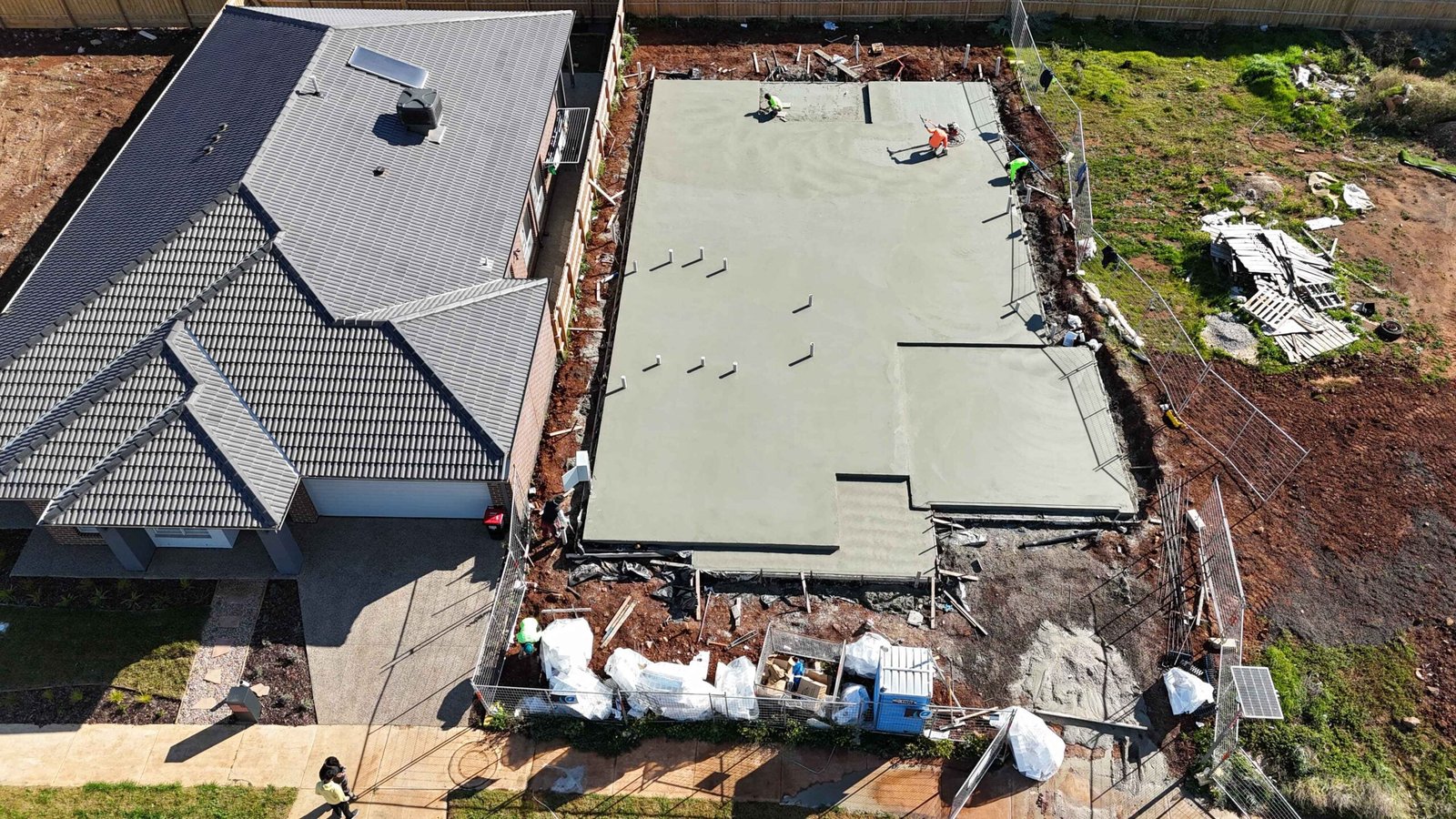
Trenching works for footings and drainage in Melbourne

Trenching Across Melbourne

Trenching is narrow excavation work, typically dug to precise depths and lines for strip footings, stormwater and drainage pipes, agricultural drainage behind retaining walls, or service conduits such as electrical and plumbing runs. Unlike bulk excavation, trenching requires accuracy over volume — the trench needs to be the right width and depth along its full length, often to a specified fall for drainage.

HPL Construction carries out trenching as part of footing, retaining wall and drainage projects across Melbourne, using appropriately sized equipment for the job at hand.

Benefits of Professional Trenching

  • Accuracy over the full run. A trench that's out of line or off-grade even slightly can throw off a footing pour or leave a drainage pipe without the fall it needs to work — we set out and check depth and line continuously, not just at the start and end.
  • Right-sized equipment. Narrow trenching is a different job to bulk earthmoving, and using appropriately sized machinery (rather than an oversized excavator) keeps the trench clean-sided and minimises spoil and reinstatement.
  • Safer around existing services. A Dial Before You Dig check and careful excavation practice around marked services reduces the risk of costly and dangerous strikes on power, gas, water or communications lines.
  • One crew for excavation and installation. Where the scope includes laying drainage pipe or conduit, having the same crew excavate and install avoids the handover gaps that can occur between separate trades.
  • Efficient reinstatement. Neatly excavated, appropriately spoil-managed trenches backfill and compact more predictably, reducing the risk of future settlement along the trench line.

Common Trenching Applications

We regularly trench for strip footings ahead of a concrete pour, agricultural drainage pipe behind retaining walls, stormwater lines, and service conduit runs for electrical or plumbing work. Each application has different depth, width and fall requirements, which we confirm from your engineering drawings or site-specific needs.

  • Strip footing trenches. Dug to the width and depth called up on the engineering drawings, ready for reinforcement and a concrete pour.
  • Stormwater and drainage lines. Excavated to a consistent fall so water moves to the intended discharge point rather than pooling along the line.
  • Agricultural drainage behind retaining walls. A standard part of most sleeper retaining wall builds, directing groundwater away from the wall structure.
  • Service conduit runs. Trenches for power, water, gas or communications conduit, dug to the depth and separation requirements of the relevant service authority.

Our Process, From Enquiry to Completion

  1. Enquiry & site details. You provide your address, what the trench is for (footing, drainage or a service run), and any engineering drawings or plans you already have.
  2. Site assessment & free quote. We assess access and site conditions and provide a clear, itemised quote for the trenching scope, including any pipe or conduit installation.
  3. Dial Before You Dig & planning. Before any digging starts we arrange a Dial Before You Dig service location check, confirm the required depth, width and fall, and plan the excavation sequence.
  4. Scheduling. We lock in a start date around your access and, where relevant, coordinate with your builder or other trades working on the same project.
  5. Construction. The trench is excavated to line and grade, with any pipe, conduit or reinforcement installed as part of the scope — see the construction steps below.
  6. Inspection, backfill & handover. Where relevant, the trench is checked or inspected before backfill, then reinstated and handed back over ready for the next stage.

Planning A Trenching Project?

Send us your site details and any drawings for a free, itemised quote.

Our Trenching Process

We confirm the required depth, width and fall from your engineering drawings or site-specific needs, arrange a Dial Before You Dig service location check, then excavate the trench to line and grade using appropriately sized equipment. Where the scope includes drainage pipe or conduit, this is laid and bedded as the trench progresses. Spoil is managed on site or removed as needed, and the trench is backfilled and compacted once excavation, installation and any required inspection are complete.

Materials Used

  • Bedding sand or fine aggregate — laid beneath drainage pipe or conduit to provide even, stable support along its full length.
  • Agricultural or stormwater drainage pipe — slotted ag pipe for subsurface drainage behind retaining walls, or solid stormwater pipe for surface water runs, sized to the application.
  • Geotextile sock or fabric — wrapped around agricultural pipe in drainage trenches to reduce silt ingress while still allowing water through.
  • Conduit — PVC or approved conduit for electrical, water, gas or communications runs, sized and depth-rated to the relevant service authority's requirements.
  • Backfill material — excavated spoil where it's suitable for reuse, or imported compactable fill where the original material isn't appropriate for backfilling around a pipe or conduit.
  • Trench mesh and reinforcement — for footing trenches, sized to the engineering design ahead of the concrete pour.

Equipment & Machinery Used

Trenching calls for equipment matched to the narrow, precise nature of the work: mini and compact excavators fitted with trenching buckets sized to the required width, laser levels or grade lasers to hold an accurate, consistent fall along drainage lines, hand tools for fine trimming and around service crossings, and trench shields or shoring equipment on deeper trenches where the excavation face needs to be supported. On footing trenches, we work directly to the engineering drawings to confirm the excavator bucket width matches the specified footing width.

Engineering & Compliance Considerations

Before any trenching begins we arrange a Dial Before You Dig service location check — the free national service that identifies underground power, gas, water and communications assets on and around a site. It's a genuinely essential step for trenching specifically, since trenches for drainage and service conduits, almost by definition, run through the areas where existing services are most likely to be buried.

What a trench needs to achieve depends entirely on what it's for: a strip footing trench is dug to the width and depth shown on the engineering drawings, prepared under AS 2870 (residential slabs and footings) or AS 3600 (concrete structures) for commercial work; a stormwater or agricultural drainage trench is dug to a consistent fall rather than a fixed depth, so water reaches its intended discharge point; and a service conduit trench follows the depth and separation requirements set by the relevant service authority (power, water, gas or telecommunications). As with any excavation, trenches over 1.5 metres deep must be shored, battered or otherwise supported under Victorian workplace safety requirements, and we plan for this on deeper footing or service trenches. Trenching tied to a building permit, such as strip footings, is also subject to inspection by the project's registered building surveyor under Victorian Building Authority (VBA) requirements.

Common Site Conditions & Challenges

  • Existing services. Even after a Dial Before You Dig check, older established sites can have undocumented or inaccurately mapped services; we excavate carefully around marked service locations and by hand where a service is close to the trench line.
  • Rock or hard ground. Rock or heavily compacted fill along a trench line takes longer to excavate and can affect the achievable depth or line in places — something we assess and discuss before and, if it arises unexpectedly, during the work.
  • Maintaining fall over distance. Drainage trenches need a consistent fall over their full length; on longer runs or uneven ground this takes careful, continuous grade checking rather than a single depth measurement.
  • Restricted or tight access. Narrow side access, established gardens or nearby structures can limit machinery size and require more hand-trimming to keep the trench accurate.
  • Groundwater and wet ground. Shallow groundwater or wet, unstable trench walls, particularly on drainage-line excavations, can require additional care or temporary support to keep the trench safe and workable.
  • Trench collapse risk. Unsupported trench walls, especially in sandy or loose soil, can collapse without warning; we assess soil conditions on site and shore or batter accordingly rather than relying on depth alone.

Cost Factors

We don't publish fixed trenching prices, because cost depends on what the trench is for and the conditions along its path. The main factors are: total trench length, required depth and width (a deep service trench takes more time and, past 1.5 metres, requires shoring or battering, than a shallow drainage line), ground conditions (rock or heavily compacted fill slows excavation compared with normal soil), whether pipe, conduit or reinforcement supply and installation is included in the scope, site access for trenching equipment, and how much of the excavated spoil can be reused as backfill versus needing removal. Every quote we provide is itemised against your specific project, not a flat per-metre rate that ignores what's actually involved.

For a fast planning figure before you request a formal quote, our Trench Mesh Calculator and Strip Footing Calculator give instant estimates for footing trench materials.

Quality Assurance & Safety Standards

Every trench is excavated to the depth, width and fall required for its specific purpose, checked against engineering drawings for footing work or against grade for drainage lines. Our crews are licensed and fully insured, and every trenching project is planned around a current Dial Before You Dig service location check. On site, we manage excavation safety in line with Victorian workplace safety requirements, including shoring or battering trenches over 1.5 metres deep, safe access and egress, and appropriate protection around open trenches until they're backfilled.

Why Choose HPL Construction For Your Trenching

With over 1,000 projects completed across Victoria and appropriately sized equipment for precise trench work, our licensed and fully insured team delivers trenching to the required depth, width and fall for your project.

Get Your Free Trenching Quote

Send us your site details for an accurate, itemised price -- no surprises once work begins.

Trenching Across Melbourne

We deliver trenching throughout Melbourne and Victoria, from inner-city infill sites to greenfield estates on the urban fringe. Browse your region below, or see every suburb we service.

Related Calculators

Get an instant planning figure before you request a formal quote.

1,000+
Projects Completed
10+ Years
Residential Concrete Experience
Licensed
& Fully Insured
Melbourne
& Victoria Wide

Frequently Asked Questions

What is trenching used for?

Trenching is used for strip footings, drainage pipe installation, agricultural drainage behind retaining walls, and service conduits such as electrical or plumbing runs.

How deep can trenches be dug?

Trench depth depends on the application — footing trenches typically follow engineering drawings, while drainage trenches are dug to achieve the required fall. We confirm depth requirements for your specific project.

Do you install drainage pipe as part of trenching?

Yes, we can excavate and lay agricultural or stormwater drainage pipe as part of a trenching project, commonly alongside retaining wall construction.

Is trenching included in retaining wall projects?

Yes, drainage trenching behind the wall is a standard part of our Concrete Sleeper and Timber Sleeper Retaining Wall projects.

Can you trench around existing services?

Yes, we take care to identify and work around existing underground services. Always arrange a "dial before you dig" check before any excavation work.

What is Dial Before You Dig, and why does it matter for trenching?

Dial Before You Dig is the free national service that identifies underground power, gas, water and communications assets on and around a site. It matters especially for trenching because drainage and service trenches are, by their nature, dug through the areas where existing services are most likely to run. We arrange this check before any trenching project begins.

How wide does a footing trench need to be?

Footing trench width is set by the engineering drawings for your project, typically matching the specified strip footing width. We confirm this before excavation so the trench and any trench mesh or reinforcement line up correctly.

Do trenches over a certain depth need shoring?

Yes. Victorian workplace safety requirements call for excavations, including trenches, over 1.5 metres deep to be shored, battered or otherwise supported to prevent collapse. We assess and plan for this on any deeper footing or service trench.

How do you make sure a drainage trench has the correct fall?

We set out and check grade continuously along the trench length using laser levels, rather than only measuring depth at the start and end, so water reaches its intended discharge point along the full run.

Can you excavate trenches for electrical or plumbing conduit?

Yes, we excavate service conduit trenches for electrical, water, gas or communications runs to the depth and separation requirements of the relevant service authority.

What happens if you hit an unmarked service while trenching?

If an unmarked or inaccurately located service is encountered, we stop work in that area, assess the situation, and discuss the impact with you before proceeding, rather than continuing to excavate around it.

Do you supply and lay the pipe or conduit, or just dig the trench?

We can do either, depending on your project scope — excavation only, or excavation plus supply and installation of drainage pipe, agricultural pipe or conduit as one coordinated service.

How close to an existing structure or boundary can you trench?

This depends on the depth of the trench and the type of structure or boundary treatment nearby. Deeper trenches close to existing footings or retaining walls may need additional care, shoring, or a more conservative approach, which we assess on site.

What ground conditions can affect a trenching project?

Rock, heavily compacted fill and shallow groundwater are the main conditions that can slow trenching work or affect achievable depth and line. We assess ground conditions where possible before quoting and manage them as they arise on site.

Do you backfill and compact the trench after installation?

Yes, backfilling and compaction is part of a standard trenching scope once excavation, any pipe or conduit installation, and any required inspection are complete.

Can trenching be staged around other trades on my project?

Yes, we regularly coordinate trenching scheduling with builders and other trades, particularly where footing trenches or service runs need to align with a broader construction program.

Can I get an instant estimate for footing trench materials?

Yes. Our free Trench Mesh Calculator and Strip Footing Calculator give instant estimates for trench mesh, reinforcement and concrete volume based on your footing dimensions.

Is trenching work covered by warranty?

Yes, our trenching work is covered in line with standard Victorian domestic building warranty requirements where it forms part of a structural or building project.

Ready To Get Started?

Request a free, no-obligation quote and our team will assess your site and provide an accurate, fixed price.